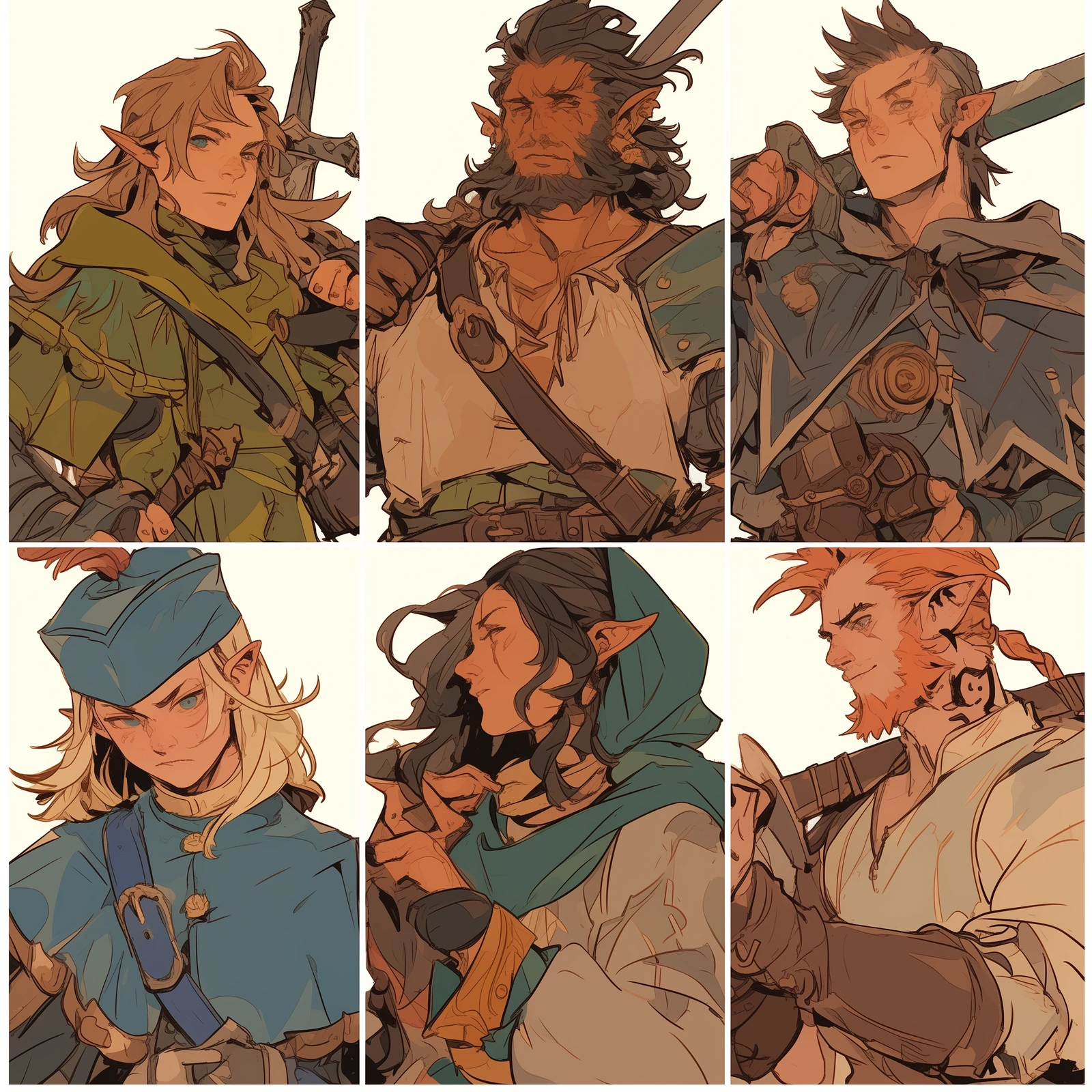
| Durûm name | Tharn ("burden, the load that is carried") |
|---|---|
| Oath-name | Tharn-ûr ("the burden, carried forever") |
| Aliases | Ironfist (human epithet), the King in Stoneculling |
| Relatives | Undetermined |
| Affiliation | Dwarven Empire (Du-durn), the Stonecouncil (Khaz-Kuld) |
| Class | Runer (durun) |
| Occupation | First of the Stonecouncil ("King" in human usage) Bearer of the Hall-Seal Formerly court runer to King Kald |
| Mana Colour | Cooled forge-bronze |
|---|---|
| Mana Ability | Runecarving in the cut-eternal; the Hall-Seal |
| Marital status | Undetermined |
|---|---|
| Date of birth | c. 762 a.S. |
| Place of birth | Emberdeep (then Brom-Udul) |
| Reign | Since 1020 a.S., the Fall of Emberdeep |
| Date of death | Living |
| Artifacts | The Iron Hand |
|---|---|
| Items | The Hall-Seal of the Empire |
| Species | Dwarf |
|---|---|
| Age | c. 290 (dwarves live to about 350) |
| Hair Colour | White-grey |
| Gender | Male |
| Height | Approx. 4'6", stooped by age |
| Eye color | Slate grey |
| Build | Heavy-set, once powerful, now bowed |
| Destinctive Features | A right hand of forged iron, cut with runes Scar ring where the flesh ends One braid left unbound |
| Predecessor | King Kald (his king and friend) |
|---|---|
| Allies | The Stonecouncil (uneasily) |
| Enemies | Karn'thûreth, the Ashen Debt The dwarves of the Fürstentum Stormpeak (in his eyes) |
| Appears in | World lore (no appearance yet) |
|---|
¶ The King in Stoneculling
¶ Names
Humans call him King Thrain Ironfist, and both halves of that are translations. His name in Durûm is Tharn: burden, the load that is carried (as opposed to dûm, the weight a thing simply has). "Thrain" is what human ears made of it, and the dwarves do not correct them. Ironfist is a human epithet for his iron hand; no dwarf uses it.
"King" is a human word as well. In Stoneculling (Khaz-Kuldun) he is the First of the Stonecouncil (Khaz-Kuld), elected by the council for life: the first ruler of the Empire ever chosen rather than born.
His oath-name is Tharn-ûr, "the burden, carried forever", sworn in the cut-eternal aspect on the day he was elected. He still introduces himself in the old manner, Ka-Mor-Udul-ul, Tharn, "I, of the hall Mor-Udul, Tharn", anchoring himself to a hall that no longer stands. By rights a dwarf whose hall has fallen should name himself ka-toth, the hall-less. Thrain never has. Most dwarves read it as grief; some read it as defiance.
¶ Appearance
Thrain is very old for a dwarf and carries every year of it. He was broad and heavy once, and the frame is still there under the stoop. His beard and hair have gone white-grey; he wears them braided in the Emberdeep manner, except for one braid he has left unbound since the day the city fell. His eyes are the grey of slate.
His right hand is iron. Below the wrist, where a ring of old scar tissue marks the end of the flesh, sits a forged hand cut with runes along every finger and sealed at the wrist with a seal-stroke. It moves as a living hand moves, slowly. It is a virk working, signed with his own name.
¶ Personality
Thrain is a broken man who has made himself into an office. Since Emberdeep fell and his king died holding the gate, he lives for the throne and almost nothing else. He is not cruel and not proud; he is worn down to duty, and duty is what holds him upright.
He speaks little and almost never in the sacred register; he has seen what a claim in -ûr costs. He does not forgive himself and does not ask anyone else to. To him, giving up would be a na-dur-ûr, the forswearing of an eternal cut, and he would rather die in the seat than commit it.
¶ Background
Emberdeep. Thrain was born in Emberdeep, then still Brom-Udul, the forge-heart, and became court runer to King Kald, the last hereditary king of the Empire, and his friend. In 1020 a.S., Karn'thûreth, the Ashen Debt, one of the karn'tharaël, came up through a tear beneath the city (see The Fall of Emberdeep). Kald ordered Tharn to lead the survivors out through the inner gate, and stayed beneath it himself.
Thrain lost his hand on the way out. The thing's chains reached past the king and took him by the right arm, and whatever its kind holds becomes part of its binding: whatever wounds the creature wounds the one held. Thrain cut his own hand off to get free. The gate closed with Kald on the other side.
Stoneculling. Kald had died childless, and the hereditary line ended with him. The survivors reached Stoneculling, and the Stonecouncil, with no one to crown, elected a First for the first time. They chose the runer who had brought them out.
The inherited debt. With the Hall-Seal, Thrain inherited what every ruler of the Empire has carried since the Shattering: the debt of the Gul'durak, the Fesselschmiede, who held Malnaar's chains. The outer ring of their binding was the hall-seal, the authority of the Empire, and their protection was the throne's duty. On the night they were murdered, the throne failed them, and Malnaar's escape broke the world. That was more than a thousand years before Thrain was born. He swore his oath-name on the day he took the seal: that he would carry the debt until it was paid. Kald carried it before him, quietly, as the kings had. Thrain carries it as if the failure were his own.
The debt has grown heavier in his time. The empty array of the Runebound Citadel, still framed by the Empire's hall-seal, has drawn Karn'tharaël, the First Wound, into itself: the greatest of the kind that took his first hall now lies inside the binding his authority anchors.
¶ The Iron Hand
The hand was forged and cut in the first year in Stoneculling, by Thrain himself, left-handed. It is a working in the cut-eternal, sealed with his true name-rune, and paid for, as every working must be, with something real: he gave it the memory of his own right hand. He no longer remembers what it felt like.
Because it is signed with his name, the hand lives exactly as long as he answers for it.
¶ Magic and Abilities
Thrain is a runer (durun), and an old and exacting one: for most of his life the king's own. He cuts workings in the -ûr aspect, reads whether a carving is virk or toth at a glance, and can tell a forged seal-stroke from a true one by touch, with either hand.
As First of the Stonecouncil he bears the Hall-Seal, the authority of the Empire that forms the outer ring of every great dwarven binding. He feels the bindings he anchors the way one feels weather in an old wound.
- Runecarving: a master of the cut-eternal, slow, exact, unforgiving of error.
- Seal-reading: can judge any dwarven working, its state, its debtor, its age.
- The Hall-Seal: lends the Empire's authority to a working, making it far harder to break by force.
¶ Signature Move: The Outer Ring
Thrain lays the iron hand on stone and speaks the gate-line of the dwarves, khazak-ak grun-ûr, "the enduring ones hold here, cut to last", with the Hall-Seal behind it. For as long as he holds the stroke, the stone under his hand will not open and will not break. It is the working Kald died holding. It costs him: while the Outer Ring holds, he feels every debt the seal carries.
¶ Soul Colour
Thrain's soul colour is cooled forge-bronze: a bronze that once glowed and has gone dull, like the banked heart of Mor-Udul. There is still heat in it, deep down, and it is very hard to see.
¶ Weaknesses
- Age. He is near the end of a dwarven life, and his body knows it.
- The oath. Tharn-ûr forbids him to set the burden down. He cannot rest, abdicate, or let the council choose his successor without breaking a cut-eternal oath.
- The hand. The Iron Hand is a working signed with his name. Strike the name, and the hand dies.
- Guilt. He judges every choice by two nights: the one his king died, and the one the throne failed the Gul'durak. Anyone who knows that can lead him.
¶ The Succession
Thrain is the first elected First, and no one has yet elected a second. The Stonecouncil elects only when the seat is empty, and Thrain will not empty it. He believes the debt must be paid before anyone else inherits the Hall-Seal, because the next First would inherit the outer ring of the Citadel's hungry working along with the crown. The houses of the council wait for him to die, and argue over the rules of an election that has happened only once.
¶ Relations
- Kald. His king, his friend, and the reason he is alive. Thrain has never gone back to Emberdeep.
- The Stonecouncil. He leads it, and it tolerates him. The council honours the oath and resents what it costs the Empire.
- The Fürstentum Stormpeak. Thrain holds the dwarves who broke from the Empire to share a realm with humans to be oathbreakers. He has never recognised Khaz-Grun and speaks of its people only as "the hall-less". There is no war, and no peace either.
- Klaus Ironfoot. Klaus once stood in the sworn guard of the dwarven throne, long before Thrain's election. Thrain knows the name from the old guard-rolls. He has never asked Klaus how long before.
- The karn'tharaël. Karn'thûreth took his hall, his king and his hand, and still lies beneath the ruins of Emberdeep. The First Wound lies in the Citadel, inside his own seal. He has gone to see neither.
¶ Motivation
Thrain wants the debt paid. He does not know how. Rebinding Malnaar is beyond anyone living, as far as he knows: the Gul'durak craft died with the family. Quietly, against the council's knowledge, he searches for the one thing that would change that, an uncounted, unsworn Gul'durak heir.
He does not know that one line survived. Its present head bears the old name Thûndurak-ûr, lived through the Fall of Emberdeep as Thrain did, and has since worked the family craft in the cold forges of the ruins where Kald died.
¶ Role in the World
Thrain is the last ruler who saw the Golden Age end. He holds the Empire together by refusing to let go of it, and the first elected First will decide, by the way he dies, what every First after him inherits: not a crown but a binding.
¶ Rumors
- "They say he never sleeps in the royal chambers, only on a bench in the Grand Citadel, beside the Hall-Seal."
- "Some claim the iron hand still moves at night, cutting runes in the dark that he does not remember in the morning."
- "There is talk that he heard Kald's voice through the inner gate after it closed, and that he did not open it."
- "Old soldiers whisper that Klaus Ironfoot stood guard over the Gul'durak the night they died."
- "Rumor has it he keeps a list of every child born in the Empire in the last hundred years, and reads it every winter."