¶ Overview
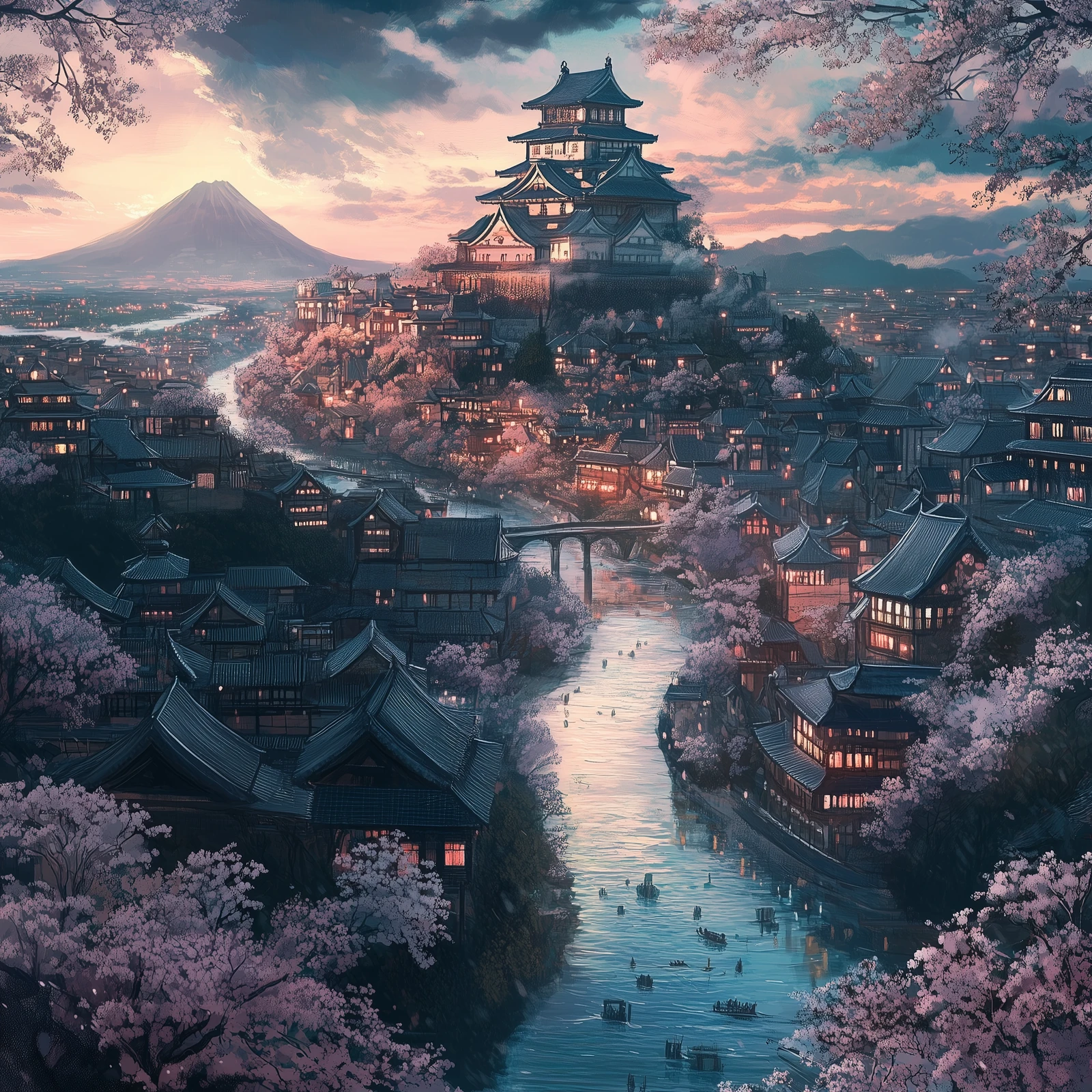
Asagawa is the capital city of Asagawa Province on the island of Kirijima and the ancestral seat of the Kanzaki family, one of the Four Great Houses of the Shogunate. Renowned for its breathtaking beauty and tranquil atmosphere, Asagawa is affectionately known as the "City of Blossoms", due to the immense forests of cherry blossom trees that surround and weave through the city like a living tapestry. The city's elegant waterways natural rivers and carefully maintained canals flow through nearly every district, nurturing the vast groves of cherry trees that dominate the skyline during blooming season. In spring, the entire region transforms into a sea of petals, drawing artists, poets, and pilgrims from across the realm.
¶ Geography
The city itself is built around a vast and intricate network of rivers and streams that weave through every district, supplying both fresh water and a tranquil ambiance. These waterways also nourish the endless rows of sakura trees that dominate the landscape. The flowing water, the petals, and the ever-changing light create a natural harmony that defines Asagawa’s identity. The city of Asagawa is gracefully nestled at the foot of the Kazeyama Range a series of wind-swept, mist-veiled mountains known for their spiritual resonance and ever-changing skies. The Kazeyama peaks are often cloaked in drifting fog, and their slopes are home to shrines, hermit dwellings, and ancient monastic paths carved into the stone over generations.
High among these peaks rests the Temple of Byakko, a sacred site devoted to the White Tiger, the guardian spirit of the West, embodiment of justice, and divine patron of House Kanzaki. The temple is a place of intense spiritual training and contemplation, accessible only to those who make the arduous journey up the mountain passes. It is said that the wind itself serves as a gatekeeper, allowing only the righteous and disciplined to pass without being turned away by treacherous storms or sheer cliffside paths.. From nearly every district in the city, one can see the towering Mount Hinoyama in the northwest, an active volcano shrouded in both reverence and mystery. On clear, cloudless days, the black silhouette of Hinoyama cuts against the sky like a divine blade.
¶ Political and Defensive Structures
At the heart of Asagawa lies Inuyama Castle, maintained by a trusted branch family of House Kanzaki. Though not the seat of the Kanzaki patriarch, it serves as the administrative center for the city’s affairs and a constant symbol of noble vigilance. 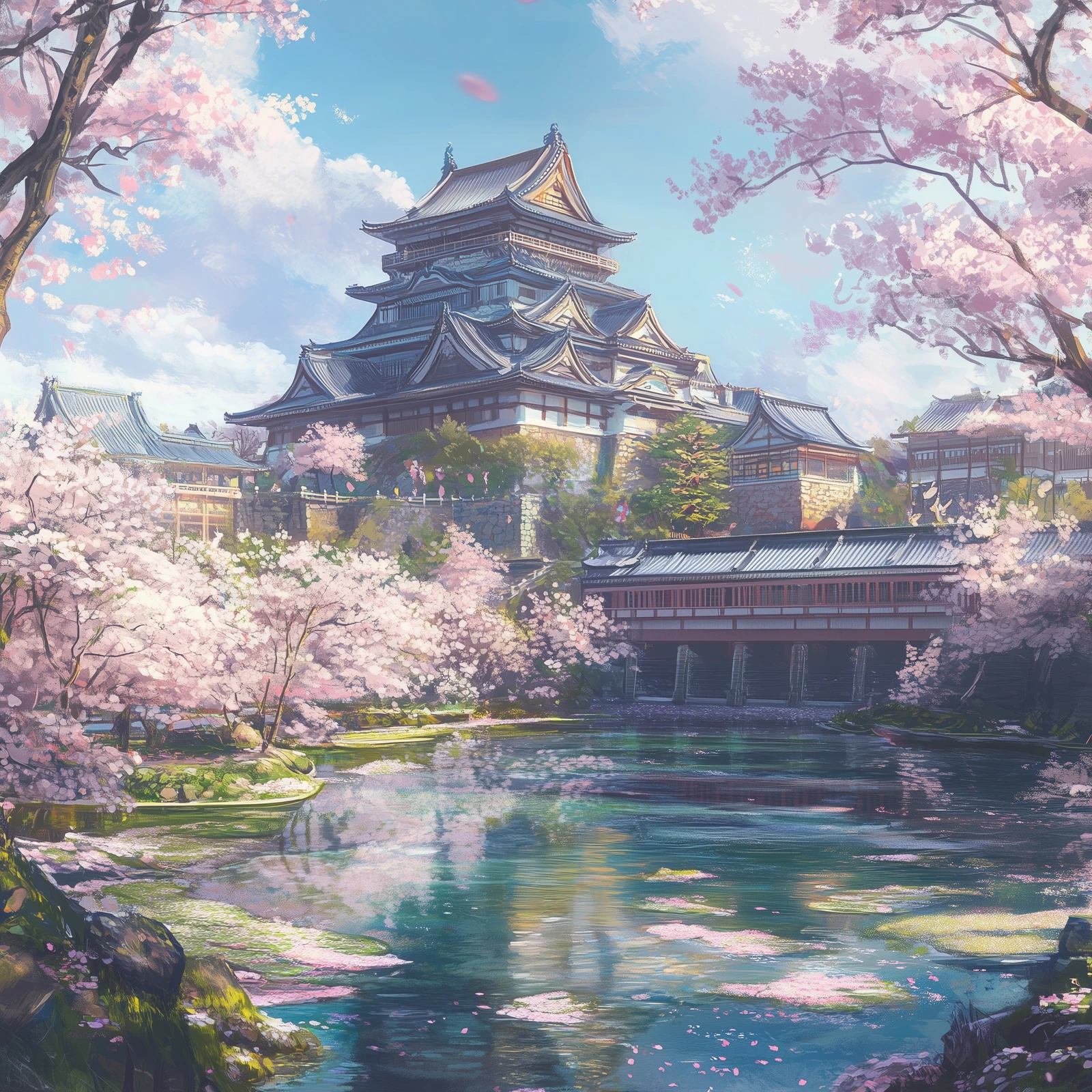 The true seat of power lies higher up the city’s slope, in the formidable Asagawa Castle Complex. This fortified estate is surrounded by masterfully designed gardens, koi ponds, and architectural marvels. The complex includes the Kanzaki Main Residence, dedicated staff quarters, armories, and a sprawling water system that winds through the entire property like a silver thread. Entry to the grounds is strictly controlled and reserved for high ranking officials or those granted personal audience with the Kanzaki family.
¶ Law, Order, and Society
Thanks to the powerful influence of House Kanzaki, Asagawa enjoys an unusually low crime rate. While minor incidents may still occur, the city is largely free from organized crime, and most wrongdoers are dealt with swiftly and discreetly. The presence of elite Kanzaki enforcers—magistrates, blade-wielding retainers, and undercover agents—ensures that peace is not just preserved but deeply embedded in the city’s social fabric. The citizens of Asagawa are known for their refined manners, discipline, and appreciation for beauty. This social order is matched by a cultural reverence for harmony and personal responsibility, values upheld and modeled by the Kanzaki themselves.
¶ Culture and Festivals
Asagawa is a city of the arts and spirits. It hosts the Festival of Falling Light, where paper lanterns drift downriver beneath the night-time cherry blossoms. Music, poetry, and silent prayer accompany the celebration, turning the entire city into a living shrine of memory and hope. Shrines dedicated to nature spirits and ancestral kami can be found tucked between tree groves or beneath stone bridges, with many locals offering daily rituals at small altars. Inkmaking, scroll painting, and tea crafting are considered elevated professions here, often pursued with the same seriousness as martial training.
¶ Hakutora Dōjō
One of Asagawa’s greatest sources of pride is the Hakutora Dōjō. Founded generations ago by a member of House Kanzaki, this elite academy trains a select few in the mastery of the Odachi, Kirijima’s greatsword. Students of the school are expected not only to perfect their swordsmanship, but to embody the ideals of duty, clarity, and restraint. The current headmaster, a veteran Kanzaki swordsman, is known for his unwavering code and a simple doctrine:
"A sword that protects is eternal. A sword that seeks glory is already broken."
Graduates of Shin’oken often go on to serve as bodyguards, magistrates, or agents of the Kanzaki family. Many never leave the city, remaining as silent guardians woven into its blossom-lined streets.